

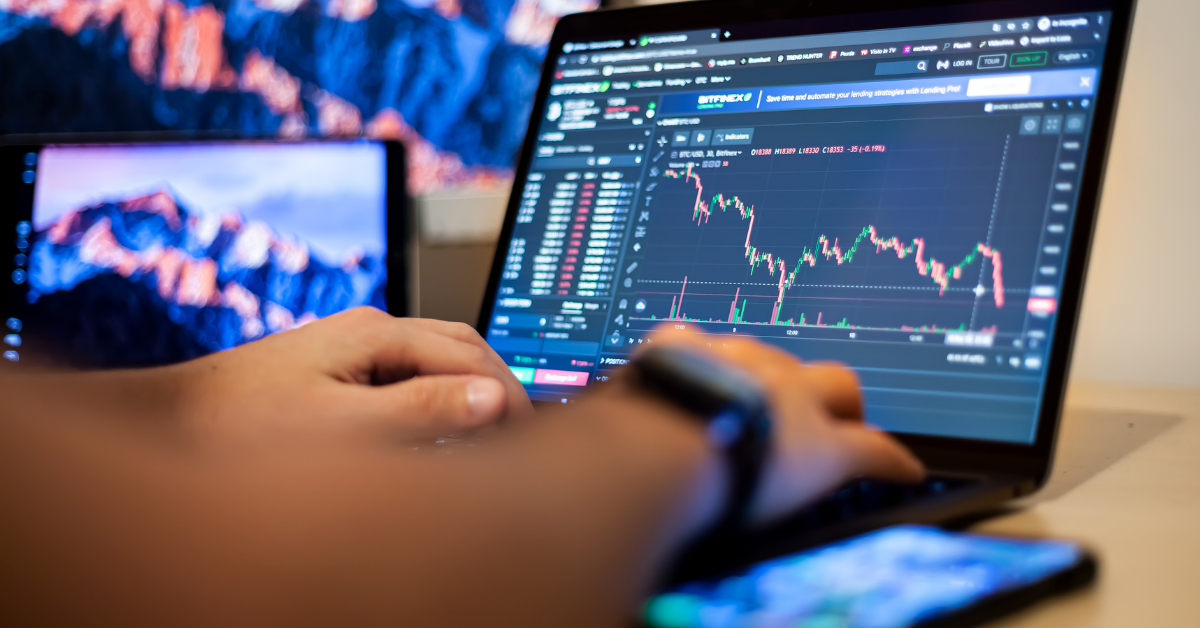
You've probably heard the adage "Start with paper trading" a hundred times if you've been considering a career in prop trading. To be honest, there's a legitimate explanation why it keeps happening. Prop firm challenges aren't exactly easy; they're designed to weed out traders who lack discipline and only give rewards to those who can demonstrate strategy, patience, and consistency. The issue? Most new traders go right in, place real money bets, and blow accounts before they've even had a chance to practice.
Paper trading can be useful in this situation. Think of it as your funding practice ground. You don't have to risk your own money to practice in real market conditions. Paper trading can also mean the difference between overcoming obstacles and departing with a funded account if you use it properly.
Let's talk about the reasons for the effectiveness of paper trading for prop firm issues, how to get the most out of it, and even where to go for the top prop firms for futures if that's your preferred market.
Why Paper Trading Matters in Prop Firm Challenges
Prop firm challenges are formal tests. They're intended to find out if you can trade profitably and uphold risk management principles. But this is where it gets interesting—most traders lose such challenges, not because they lack the ability to trade, but because they lack discipline and break down under pressure.
No Financial Pressure
Trading with real capital flips a switch in your mind. All of a sudden, every loss against you comes across as a gut punch. That emotional weight creates revenge trading, over-leveraging, and other vices. With paper trading, there's no pressure. You can concentrate on developing skills rather than losing sleep over losses burning holes in your wallet.
Risk-Free Practice
The best prop firms for futures challenges typically have tight daily limits on losses. A single sloppy trade can ruin your effort. Paper trading allows you room to experiment with strategy and rules of risk management until they're second nature. You'll have muscle memory by the time you're doing the real thing.
Real Market Conditions
Unlike ancient "demo accounts" that sometimes trailed behind real prices, modern paper trading platforms are ridiculously realistic. You see live data, true spreads, and real execution. It's basically a dress rehearsal for contest trading.
Confidence Booster
Seeing a strategy actually perform consistently—even in a virtual setting—it instills confidence. And confidence (not hubris) is half the battle in trading.
The Big Question: Is Paper Trading "Too Easy"?
Now, some traders roll their eyes at paper trading. Their reasoning is, "It doesn't count unless there's real money on the line." And sure enough, they've got a point—psychology changes when real cash is on the line. But here's the deal: paper trading isn't meant to substitute real-money trading. It's meant to train you for it.
Think of it in terms of flight simulators for pilots. I mean, flying in a simulator isn't the actual thing compared to sitting in a cockpit at 30,000 feet. But would you trust a pilot who has never flown in a simulator to take you across the Atlantic? I doubt it. The same principle works here. Paper trading does not remove the emotional aspect of trading, but it also helps hone your craft so that when emotions do enter the picture, you're better prepared.
Paper Trading as a Prop Firm "Challenge Prep"
So how do you exactly utilize paper trading for prop firm challenge preparation? Let's go step by step.
Treat It Like the Real Thing
The greatest blunder speculators commit is simulating trading on paper as if it were a video game. They make outrageous bets they wouldn't dream of risking with real money. That's a waste. Rather, replicate exactly the rules of your desired prop firm—each day's drawdown limit, profit goal, position sizing, the lot. That way, as you move to the challenge, it's a seamless transition.
Record Every Trade
Don't simply click buy and sell and go on. Journal. Take note of why you got in, where your stop was, what your target was, and how you felt about the trade. When you look back on it later, you'll notice patterns in what you do that you can correct before the real test.
Prioritize Consistency Over Giant Winners
Prop companies aren't interested in traders who swing for the fences. They want consistent, repeatable profit. Paper trading allows you a chance to pace yourself and convince yourself that you can remain disciplined. Don't worry about doubling your account—shoot for small, consistent profits.
Simulate Pressure
Although paper trading eliminates the money stress, you can still impose your own form of accountability. Set yourself deadlines. Imagine you have one month to reach your mark without violating rules. That psychological approach makes it more feasible.
The Psychology Factor
One of the lesser-known advantages of paper trading is its effect on trading psychology. Challenges are tense because they merge two pressures: executing well and adhering to strict guidelines. Paper trading allows you to internalize risk management so that you do not need to consciously think about it later on. That liberates mental energy for what truly counts—making wise decisions.
Here's the trick: during paper trading, observe how you feel. Do you experience tension when a trade moves against you slightly? Do you chase entries when you miss a move? These habits don't just go away in live trading. When you catch them early, you gain an advantage when real money is at risk.

Leave a Reply